
Gas vs Electric vs Induction Range: How to Choose
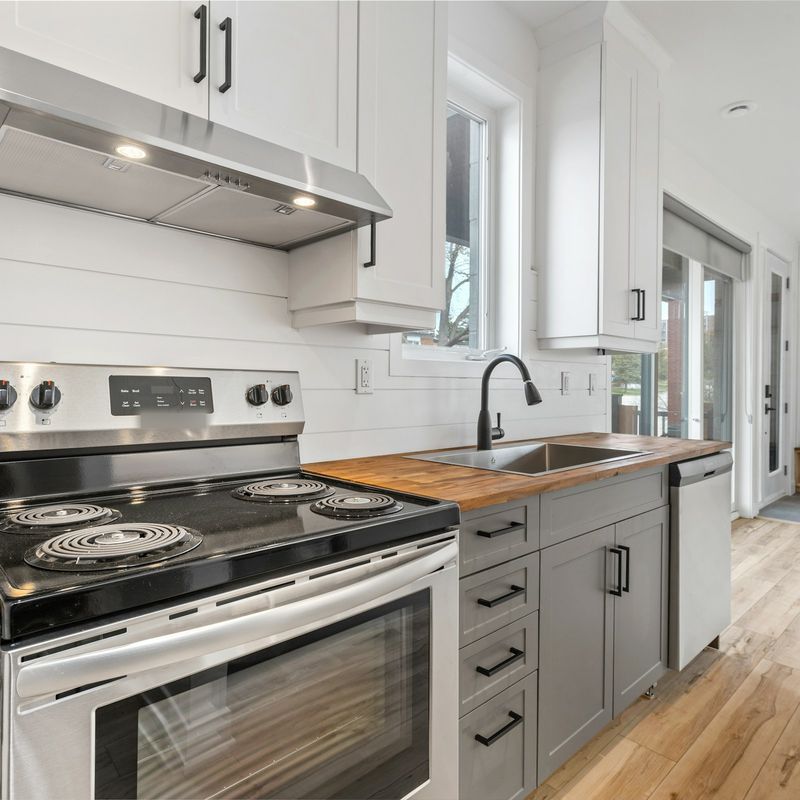
Short answer: if you have a gas line and love cooking on a flame, a gas range is a fine choice. Run the range hood vented outside every time you cook. If you are buying electric, or can add a 240-volt circuit, induction is the most efficient and fastest way to cook, but it needs magnetic cookware. A standard smooth-top (radiant) electric range is the simple, lower-cost choice that works with any flat pan.
Start with what your kitchen already has
- A gas line? A gas range needs a gas supply and a standard outlet for the igniters, clock and oven controls.
- A 240-volt range outlet? Electric and induction ranges usually need a dedicated 240-volt circuit. If you only have gas today, adding that circuit is a job for an electrician. Check your panel’s capacity before you buy.
- The opening: most ranges are 30 inches wide. ENERGY STAR notes most cooktops are 30–36 inches wide. Measure width, depth to the wall and any anti-tip bracket.
Gas vs electric vs induction at a glance
| Gas | Electric (radiant smooth-top or coil) | Induction | |
|---|---|---|---|
| How it heats | Open flame under the pan | Element heats the glass or coil, which heats the pan | Magnetic field heats the pan itself |
| Energy into the food | About a third of the heat reaches the cookware | More than gas; induction beats it by up to about 10% | About 85% of the heat reaches the cookware |
| Speed | Instant flame, slower to boil | Slowest to heat up and cool down | Fastest; boils water in nearly half the time |
| Control | Visual, very responsive | Lag when you turn heat up or down | Precise and instant |
| Cookware | Anything | Flat-bottomed pans work best on glass | Must be magnetic (cast iron, most stainless, enameled cast iron) |
| Cleaning | Grates and burner caps to lift off | Smooth glass wipes clean, but spills bake on | Smooth glass; spills don’t burn on because the glass stays cooler |
| Indoor air | Burning gas releases nitrogen oxides, carbon monoxide and formaldehyde; ventilate | No combustion | No combustion |
| Hookup | Gas line + 120 V outlet | 240 V circuit | 240 V circuit |
Efficiency, speed and air-quality points come from the U.S. Department of Energy (“Making the Switch to Induction Stoves or Cooktops”) and ENERGY STAR (“Electric Cooking Products”), both read October 17, 2026.
Induction: what to know before you switch
- The magnet test: if a fridge magnet sticks firmly to the bottom of a pan, it works on induction. Plain aluminum, copper and glass won’t heat unless the base is magnetic.
- Safety: the glass only gets warm from the hot pan. Most models switch a zone off when no pan is detected, so there is less risk of burns or a burner left on.
- Noise: some induction ranges hum or click a little on high settings, or with lightweight pans. Heavier pans are usually quieter.
- Medical devices: if anyone in the home has a pacemaker or another implanted device, ask their doctor and read the range’s manual first.
Gas: getting the most from it
- Use a range hood vented to the outdoors whenever you cook, and use the back burners when you can. Hoods catch more from the back.
- Look for sealed burners, which are easier to clean, and continuous grates, which let you slide heavy pots across.
- During a power outage, the burners on many gas ranges can be lit with a match, but the oven usually won’t run. Check your manual.
- Dual-fuel ranges pair a gas cooktop with an electric oven, for bakers who want even oven heat. They need both a gas line and a 240-volt circuit.
Features worth paying attention to (any fuel)
- Freestanding vs slide-in: a freestanding range has finished sides and usually a back panel with the controls. A slide-in range sits flush between counters with the controls up front, which looks built-in.
- Oven size: ENERGY STAR notes most range ovens hold 5–6 cubic feet. Double-oven ranges split that into two cavities.
- Convection: a fan (true convection adds a heating element by the fan) for more even baking and roasting.
- Burner or zone layout: a high-power burner for searing and boiling, a low simmer burner, and on electric or induction, bridge zones for griddles.
- Cleaning: self-clean (high heat) vs steam clean (quick, light messes).
- ENERGY STAR: since its September 25, 2023 specification, ENERGY STAR certifies residential electric cooktops and ranges (not standalone ovens). Look for the label if efficiency matters to you.
Quick checklist before you buy
- Hookup you have (gas line, 240 V circuit, or both) and whether you will add one
- Opening width (usually 30″), depth and anti-tip bracket
- Freestanding or slide-in look
- For induction: your pans pass the magnet test (or budget for new ones)
- For gas: a hood vented outdoors
- Oven size, convection and cleaning mode you want
Shop ranges on Amazon
Filter by fuel type (gas, electric, induction), width and convection on each listing.
Keep reading
Redoing the kitchen? See the dishwasher buying guide, or browse ranges.
Disclosure: As an Amazon Associate we earn from qualifying purchases. We also earn commissions from eBay and other retailers' affiliate links. Shop links on this page are affiliate links and are marked sponsored.