
What Size Dehumidifier Do You Need? Basement and Crawl Space Sizing Chart
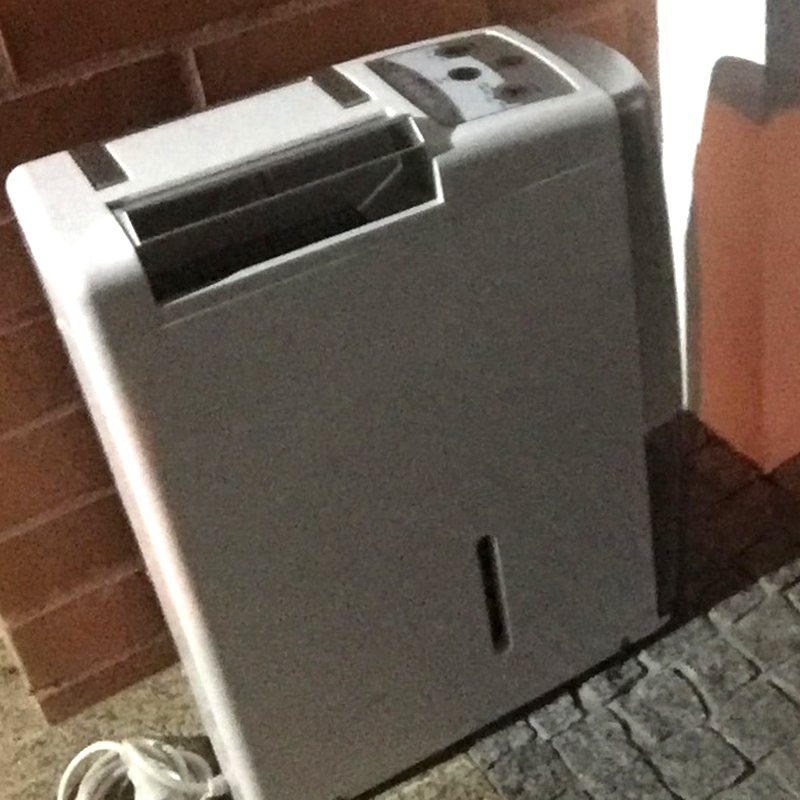
Short answer: size a dehumidifier by two things: how big the space is and how damp it is right now. ENERGY STAR’s chart puts a slightly damp space under 2,000 sq ft at 20–30 pints per day and a wet one (sweating walls, seepage) at 30–50, with larger spaces needing more. When in doubt, size up. And if you’re comparing against an older dehumidifier, remember that ratings changed in 2019: an old “50-pint” unit is roughly a 30-pint unit on today’s labels.
Step 1: Measure the space
Multiply length by width for the square footage of the area you want to dry: the basement, the crawl space, or the room. In an open basement, count the whole connected area, not just the damp corner. Close doors and windows to the space while the unit runs so it isn’t trying to dry the outdoors.
Step 2: Judge how damp it is
A hygrometer (humidity meter) gives you a real number. If you don’t have one, the description column below is a good guide.
Step 3: Read the capacity off the chart
| How the space is now | Under 2,000 sq ft | Over 2,000 sq ft |
|---|---|---|
| Slightly to moderately damp: feels damp, musty smell now and then (50–75% relative humidity) | 20–30 pints/day | 30+ pints/day |
| Very damp: always feels and smells damp, damp spots on walls and floor (75–90% RH) | 25–40 pints/day | 40+ pints/day |
| Wet: walls or floor sweat, seepage, or laundry drying in the space (90–100% RH) | 30–50 pints/day | 50+ pints/day |
Recommended capacity ranges from ENERGY STAR’s dehumidifier buying guidance for portable units, read October 21, 2026. These ranges use today’s (2020 onward) capacity ratings.
Replacing an old unit? ENERGY STAR suggests judging by how much water you empty from it each day.
Old vs new pint ratings: why the numbers dropped
In June 2019 the U.S. Department of Energy changed how dehumidifiers are tested. Portable units are now tested at 65°F instead of 80°F, closer to real basement conditions. Cooler air holds less water, so the same machine removes fewer pints per day on the new test. That’s why a new dehumidifier can look “smaller” than the one it replaces while doing the same job.
| Old rating (through 2019) | About the same on new labels (2020+) |
|---|---|
| 30 pints/day | 20 pints/day |
| 40 pints/day | 25 pints/day |
| 50 pints/day | 30 pints/day |
| 60 pints/day | 35 pints/day |
| 70 pints/day | 40–45 pints/day |
| 90 pints/day | 55 pints/day |
Rough correlation for portable dehumidifiers from ENERGY STAR “Dehumidifier Testing and Capacity,” read October 21, 2026. ENERGY STAR notes the change for any one model will vary. When comparing listings, make sure both ratings use the same standard.
Crawl spaces and cold basements
- Low temperatures: if the space usually stays below 65°F, frost can form on the coils and the compressor may cycle without removing much water. Look for a unit specified for low-temperature use, with automatic defrost or an anti-frost sensor.
- Drainage: nobody wants to empty a bucket in a crawl space. Plan for a hose to a floor drain or sump, or a unit with a condensate pump if the drain point is higher than the dehumidifier.
- Target humidity: ENERGY STAR puts the best range for a building at 30–50% relative humidity, and says levels above that can encourage mold. A built-in humidistat lets the unit switch itself on and off to hold your setting.
- Cut the moisture at the source: extending downspouts, keeping gutters clear, sloping soil away from the foundation and venting the dryer outdoors can all reduce how hard a dehumidifier has to work.
Running cost
A basement dehumidifier can run for many hours a day. Efficiency is listed as an integrated energy factor (IEF), in liters of water removed per kWh: higher is better. ENERGY STAR certified models use about 20% less energy than conventional units of the same size.
Low-temperature, drainage, humidity, moisture-source and efficiency notes from ENERGY STAR’s dehumidifier buying guidance and saving tips, read October 21, 2026.
Quick checklist before you buy
- Square footage of the whole space measured
- Dampness judged (a hygrometer reading is best)
- Capacity from the chart, sized up if unsure
- Old and new pint ratings not mixed up
- Low-temperature operation with defrost for spaces under 65°F
- Hose drain or pump planned for basements and crawl spaces
- Built-in humidistat set to 30–50% RH
- Integrated energy factor (higher is better) or ENERGY STAR
Shop dehumidifiers on Amazon
Check each unit’s pints-per-day rating (and which standard it uses), lowest operating temperature and drain options on the listing.
Keep reading
See all dehumidifiers, or read what size air purifier you need.
Disclosure: As an Amazon Associate we earn from qualifying purchases. We also earn commissions from eBay and other retailers' affiliate links. Shop links on this page are affiliate links and are marked sponsored.