
Heat Pump vs Vented Dryer: How to Choose a Clothes Dryer
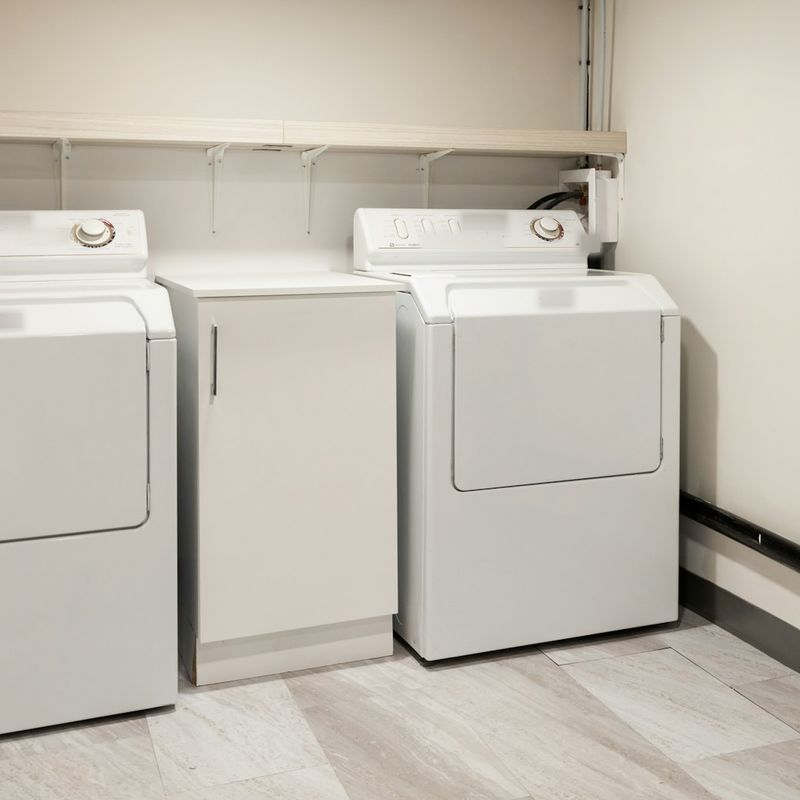
Short answer: a vented dryer is the familiar choice: it blows warm, moist air outside through a dryer vent. A heat pump dryer needs no vent at all, reuses its warm air in a closed loop, runs at lower temperatures that are gentler on clothes, and uses far less energy, but it costs more up front and you have to deal with the water it pulls out. If your laundry spot has no vent, or you dry a lot of loads and pay high electricity rates, a heat pump dryer is worth a close look.
Vented vs heat pump dryer at a glance
| Vented (conventional) | Heat pump | |
|---|---|---|
| How it dries | Heats air, tumbles the clothes, and sends the warm, humid air outdoors through a vent | Heats air, pulls the moisture out of it with a refrigerant system, then reuses the same air |
| Vent needed | Yes, to the outside of the home | No |
| Where the water goes | Out the vent as humid air | Into a drain hose, a nearby drain, or a tank you empty |
| Drying heat | Higher | Lower, so gentler on clothes |
| Energy use | The baseline | At least 28% less than standard dryers, and around 70% less per ENERGY STAR’s main dryer page |
| Up-front cost | Lower | Higher, offset over time by lower running cost |
From energystar.gov “Clothes Dryers” (buying guidance and savings tips) and “Heat Pump Dryer”, both read October 23, 2026. The two pages give different savings figures; both are shown.
When a heat pump dryer makes the most sense
- No dryer vent where you want the laundry. Skipping a new vent can save real installation work. Heat pump models can go in any room with electricity and a water source, which suits apartments, tiny homes, additions and garage apartments.
- Lots of laundry and high electricity rates. These households stand to save the most over the dryer’s life.
- Delicate clothes. The lower drying temperatures are easier on fabrics.
- Tight spaces. Compact heat pump models can be stacked with a compact washer.
The catch: the water has to go somewhere
A heat pump dryer’s moisture ends up as water. You can empty a built-in tank after each load, run the included drain hose to a nearby sink or drain pipe, or, in some setups, use a device that sends it down the washer’s drain. Before you buy, check which of these your laundry spot can support.
Pick the right size
The drum should let a full load from your washer tumble freely, with space left for hot air to circulate. Overstuffing makes drying slower; very small loads are wasteful too, because drying a single towel for 30 minutes costs about as much as a full load for the same time. A matching washer and dryer pair is usually designed for the same load size.
- Standard size: 4.4 cubic feet or more.
- Compact: under 4.4 cubic feet.
Features worth paying attention to
- Moisture sensor (auto-dry): stops the cycle when clothes are dry, which saves energy and reduces wear from over-drying. All ENERGY STAR certified dryers have one.
- Combined Energy Factor (CEF): the efficiency number for dryers. Higher is better, and you can compare it across certified models.
- Low-heat or energy-saving cycle: the setting that uses the least energy.
- Delay start: handy if your utility charges less at certain hours.
- Steam cycle: can cut down on wrinkles and ironing.
- Refrigerant (heat pump models): models with a lower global-warming-potential refrigerant, such as R-290, have less climate impact if the refrigerant ever leaks.
Before it arrives: check your hookup
Check how your current dryer is powered before you shop. Gas dryers need a gas line, many full-size electric dryers need a 240-volt outlet, and heat pump models list their own power needs. Then check the dryer’s height, width and depth, plus the space you need for the door to open, against your laundry spot, and against the washer if you plan to stack.
Get the most from any dryer
- Clean the lint filter after every load. It improves airflow and efficiency, and it’s an important safety step.
- If you use dryer sheets, scrub the filter about once a month; the film they leave cuts airflow.
- Pair it with an efficient front-load washer, which spins more water out before the dryer starts.
- Use the sensor setting rather than a long timed cycle.
Sizing, features and tips from energystar.gov “Clothes Dryers” and “Heat Pump Dryer”, read October 23, 2026.
Quick checklist before you buy
- Vented or heat pump chosen (do you have an outside vent?)
- For heat pump: drain plan sorted (tank, hose to drain, or washer drain)
- Power checked: gas line, 240-volt outlet, or the model’s stated needs
- Drum big enough for a full load from your washer
- Moisture sensor and a low-heat or energy-saving cycle
- CEF compared across the models you’re considering
- Height, width, depth and door clearance measured; stack kit if stacking
Shop dryers on Amazon
Check each dryer’s type (vented or heat pump), capacity, power hookup, drain options and dimensions on the listing.
Keep reading
See all dryers and washers, or read front-load vs top-load washers.
Disclosure: As an Amazon Associate we earn from qualifying purchases. We also earn commissions from eBay and other retailers' affiliate links. Shop links on this page are affiliate links and are marked sponsored.